
A Moment of Celebration for Pilates Re Bar’s 5th Anniversary
26 September 2026 | 07.00 AM – 07.00 PM
MGP Plaza
Five years of movement.
Five years of community.
Five years of growing, learning, and moving forward together.
This September, Pilates Re Bar celebrates its 5th anniversary through Freedom to Move—a full-day celebration created to bring our community together and celebrate what movement means to each of us.
Because movement is more than exercise.
It is the freedom to feel stronger.
The freedom to reconnect with your body.
The freedom to move at your own pace.
And the freedom to celebrate how far you have come.
Five Years. One Community. Endless Ways to Move.
Since its beginning, Pilates Re Bar has believed that Pilates is not simply about how your body looks or how perfectly you perform a movement.
It is about building a healthier relationship with your body and creating a lifestyle where movement can become a source of strength, confidence, and joy.
Over the past five years, we have had the privilege of moving alongside thousands of members, instructors, partners, families, and friends.
From our studios to our community events, from first-time Pilates sessions to stronger and more confident movements—we have witnessed countless stories of people choosing to move, grow, and take better care of themselves.
Freedom to Move is our way of celebrating those stories.
A Day to Move, Connect & Celebrate
On 26 September 2026, MGP Plaza will become a gathering place for the Pilates Re Bar community.
From 07.00 AM to 07.00 PM, visitors can enjoy a day filled with movement, wellness, community, and celebration.
Expect an experience designed for everyone—from Pilates enthusiasts and loyal PRB members to friends and families who simply want to discover a new way to move.
Throughout the day, the celebration will bring together:
- 🧘 Pilates & Movement Sessions
- 💪 Wellness Activities
- 🤝 Community Experiences
- 🎉 Fun & Celebration
- 🎁 Special Anniversary Moments
- ✨ Opportunities to Connect with the PRB Community
Whether you have been part of Pilates Re Bar for years or are just beginning your movement journey, there is a place for you here.
Movement Looks Different for Everyone
Freedom to Move is not about moving perfectly.
It is about moving freely.
Maybe your movement journey began because you wanted to become stronger.
Maybe you wanted to improve your posture, flexibility, or mobility.
Maybe you simply needed a reason to slow down and take care of yourself.
Whatever brought you here, your journey matters.
At Pilates Re Bar, we believe there is no single definition of what it means to move well.
Your movement. Your pace. Your journey. Your freedom.
Celebrating Five Years of Pilates Re Bar
Five years is more than a milestone.
It is a collection of people, stories, lessons, challenges, friendships, and moments that have shaped Pilates Re Bar into the community it is today.
And this celebration would not be complete without the people who have been part of that journey.
To our members: thank you for trusting us with your movement journey.
To our instructors and team: thank you for bringing your energy, expertise, and heart every day.
To our partners and community: thank you for growing alongside us.
And to everyone who has ever stepped into a Pilates Re Bar studio, joined a class, attended an event, or simply supported our journey—
this celebration is for you.
Save the Date
FREEDOM TO MOVE
Pilates Re Bar 5th Anniversary Celebration
📅 Saturday, 26 September 2026
⏰ 07.00 AM – 07.00 PM
📍 MGP Plaza
Come move with us.
Come celebrate with us.
Come be part of the next chapter.
Five years behind us.
A lifetime of movement ahead.
Freedom to Move.
Together, We Move Forward.
See you at MGP Plaza!
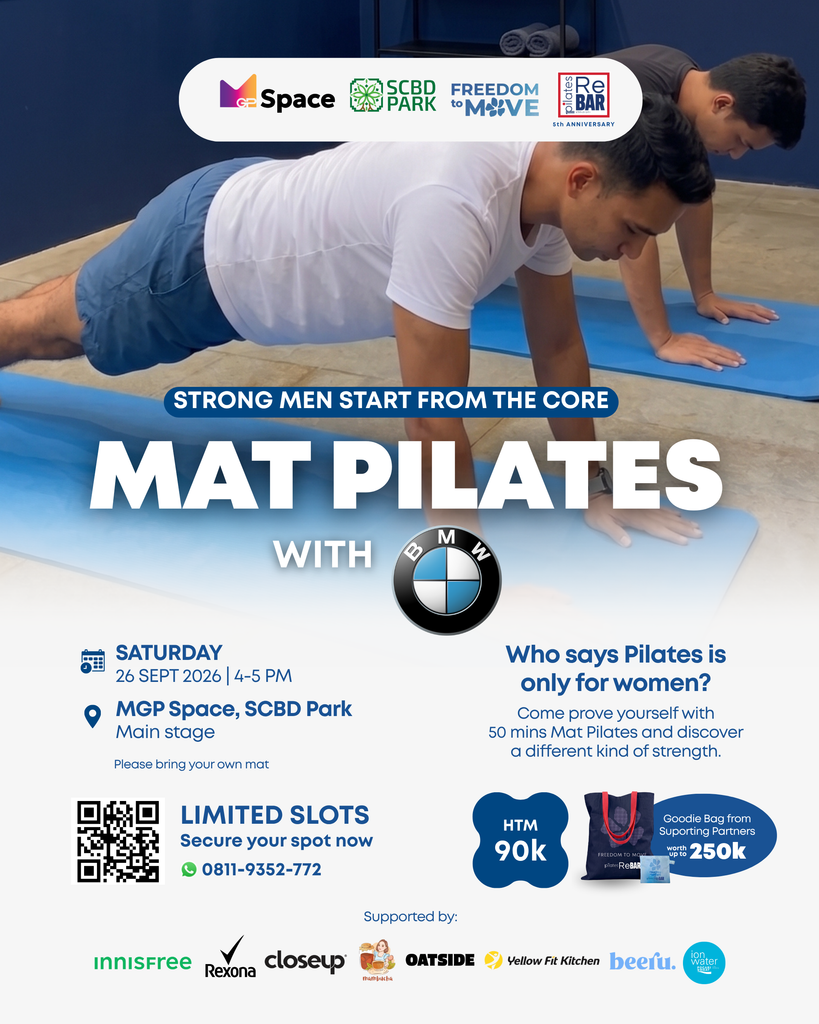
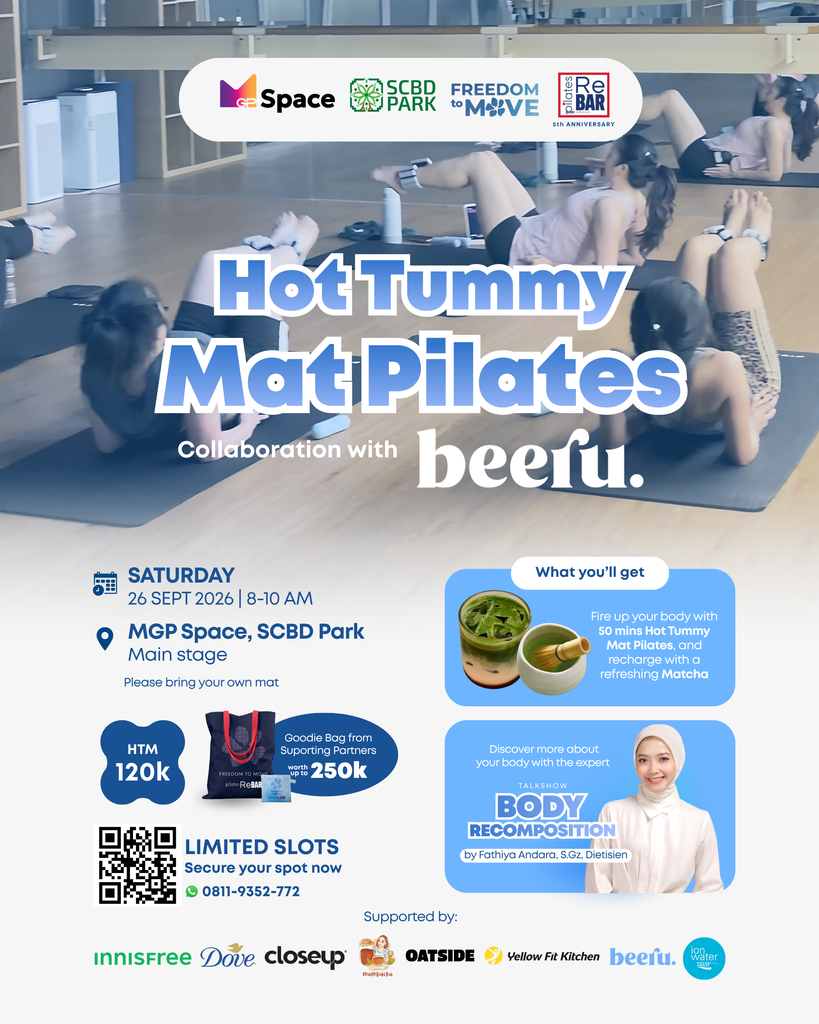


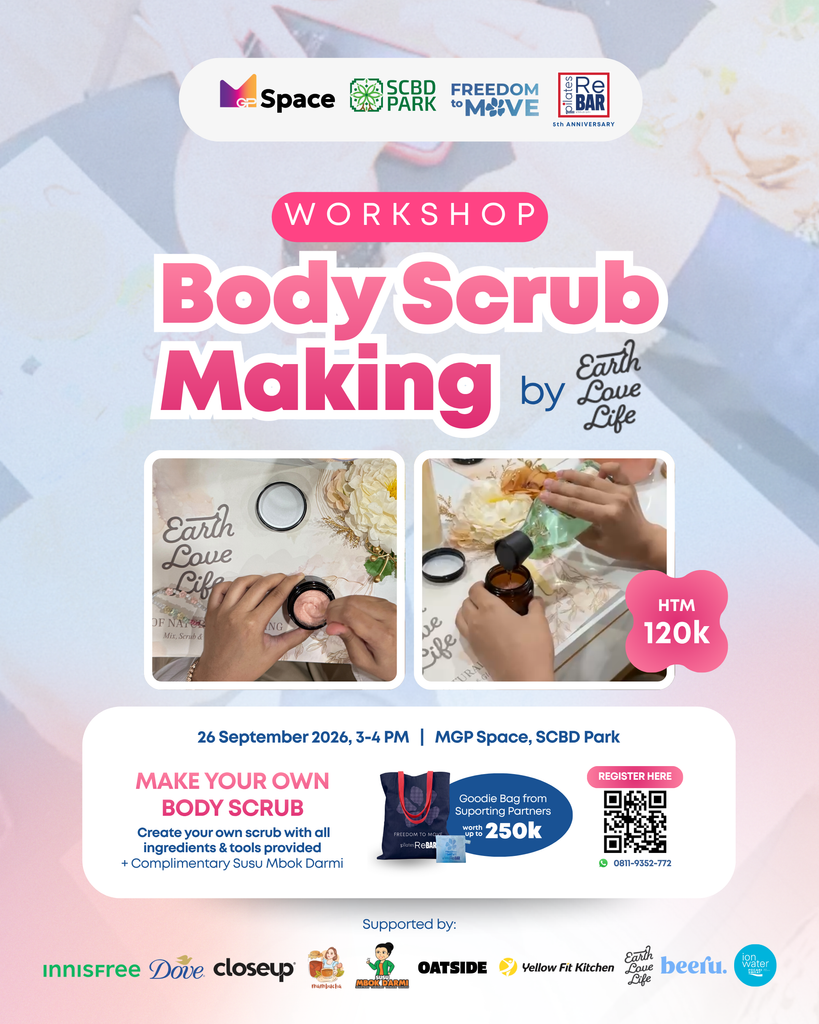


Five years ago, Pilates Re Bar began with a simple vision: to make Pilates a meaningful part of everyday movement and help more people build a stronger connection with their bodies.
Our journey started in PIK in 2021 with one studio, one community, and a commitment to delivering a thoughtful Pilates experience through the Kaizen Pilates method.
Today, five years later, that journey has grown into 12 Pilates Re Bar studios across Jakarta, Tangerang, and Bali.
But this growth is more than a number.
It represents thousands of movement journeys, dedicated coaches, loyal members, and a community that continues to believe that movement can create meaningful change.
From One Studio to a Growing Community
When Pilates Re Bar opened its first studio in PIK, our focus was simple: create a Pilates environment where people could learn to move with greater awareness, control, and confidence.
As more people discovered the benefits of Reformer Pilates, our community continued to grow.
Studio by studio, Pilates Re Bar expanded to bring the same philosophy to more neighborhoods and communities.
Today, our 12 studios are organized across North Region, South Region, Tangerang, and Bali — creating a wider movement community while staying connected by the same Pilates Re Bar philosophy.
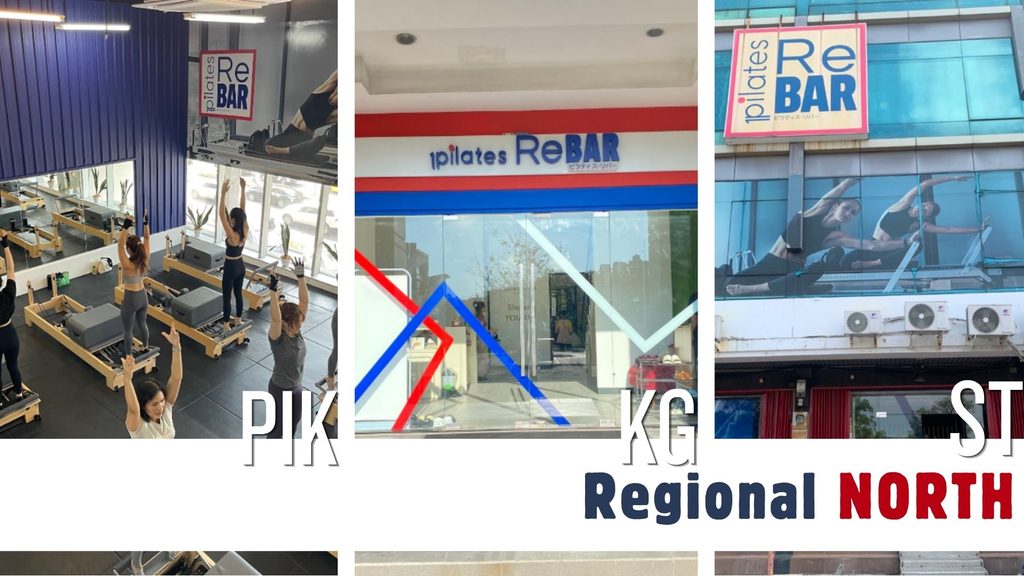
NORTH REGION
Our journey expanded from PIK into Jakarta's northern communities, bringing Pilates Re Bar closer to more people across the city.
The North Region represents an important part of our growth, connecting studios and communities across areas including:
- PIK
- Kelapa Gading
- Sunter
Each studio has its own community and character, but all share the same commitment to helping members move better, build strength, and develop greater body awareness.
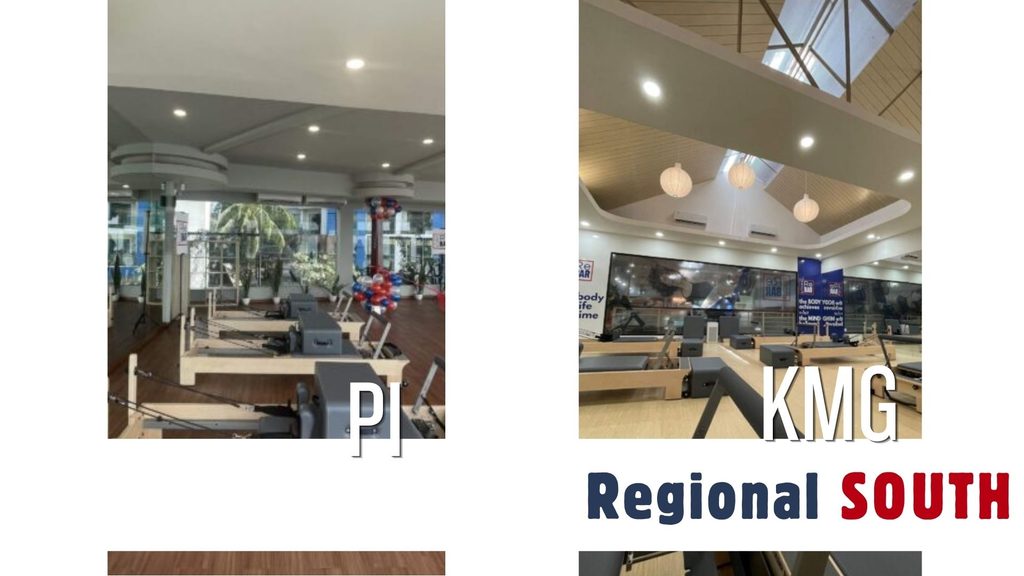
SOUTH REGION
As our community grew, Pilates Re Bar continued moving south.
The South Region brings our Pilates experience to some of Jakarta's most active and established neighborhoods:
- Pondok Indah
- Kemang
From busy professionals looking for a healthier way to balance work and life to long-time Pilates enthusiasts continuing their movement journey, these studios have become part of the daily routines of many members.
Here, Pilates is not simply a workout.
It becomes a practice of consistency, awareness, and self-care.
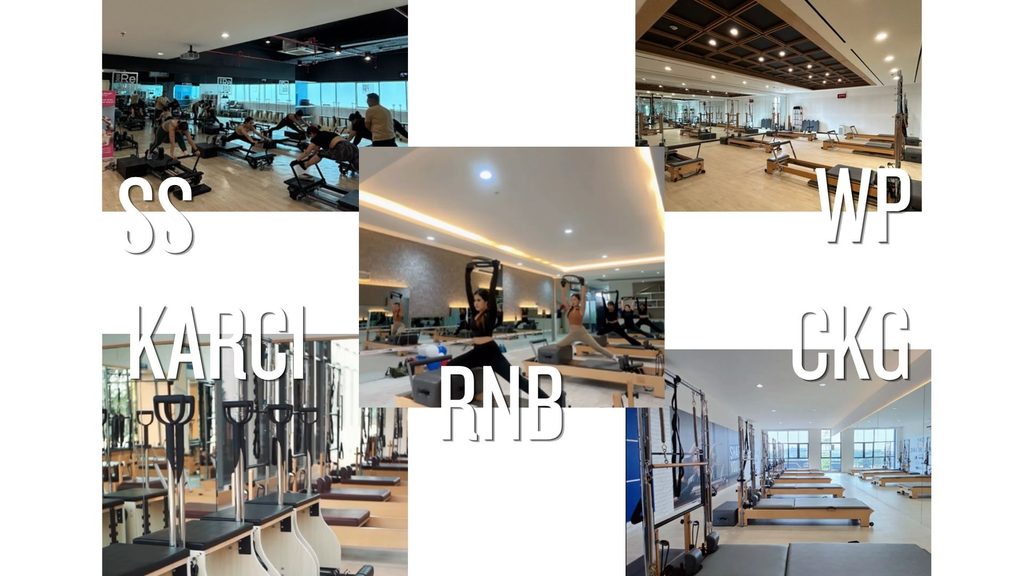
TANGERANG
Our journey also moved beyond Jakarta.
The Tangerang Region has become an important part of the Pilates Re Bar community, connecting with members across:
- Karawaci
- BSD
- Alam Sutera
The expansion into Tangerang reflects our belief that access to quality Pilates should continue to grow alongside the communities we serve.
Every new studio brings a new opportunity to introduce more people to the Pilates philosophy — and to become part of a community that values movement and wellbeing.

BALI
In 2026, Pilates Re Bar took another meaningful step in its journey with the opening of Renon Bali.
Bringing Pilates Re Bar to Bali marked more than geographic expansion.
It represented the continuation of our vision: to create spaces where people can move, connect, and grow — wherever their journey takes them.
Today, Bali has become a new chapter in the Pilates Re Bar story and an important part of our growing community.
5 Years. 12 Studios. One Philosophy.
Five years of growth have taught us that a studio is never just a space filled with equipment.
It is the people who walk through the door.
It is the coach who guides every movement.
It is the member who keeps showing up.
It is the first successful reformer class, the stronger core, the improved posture, the greater confidence — and all the small milestones in between.
From one studio in PIK to 12 studios across North Jakarta, South Jakarta, Tangerang, and Bali, Pilates Re Bar continues to move forward.
Our journey has never been only about opening more studios.
It has always been about building a stronger movement community.
And after five years, we know one thing for certain:
The journey is just beginning.
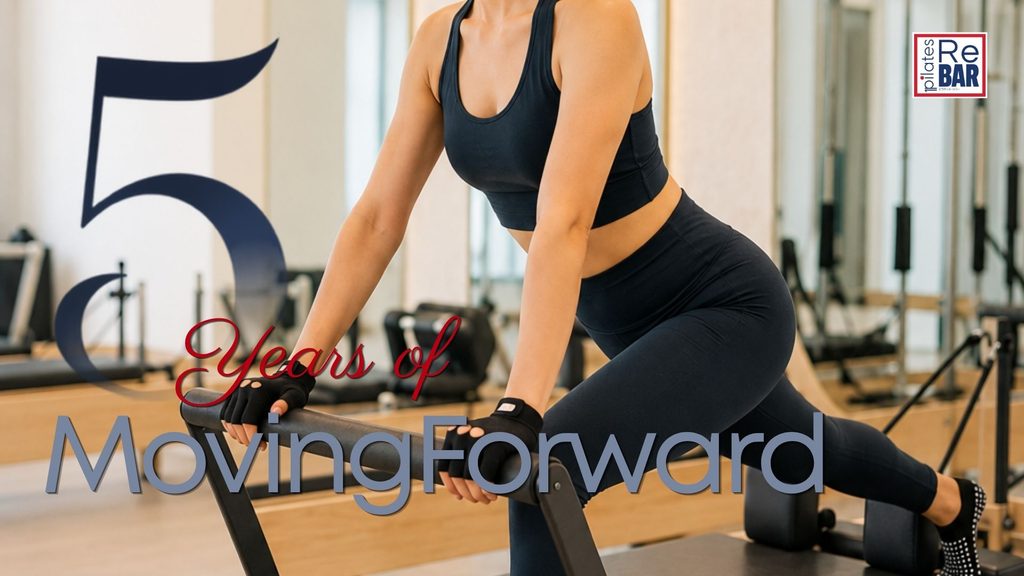
5 Years of Moving Forward
Thank you to every member, coach, partner, and team member who has been part of our journey.
Thank you for moving with us.
Pilates Re Bar — 5 Years of Moving Forward.
When companies think about corporate Pilates, one image often comes to mind: a room filled with Reformers.
And that can make workplace wellness feel complicated.
Where would you put the equipment?
Who would arrange the space?
How much would it cost?
Would employees actually participate?
The good news is that corporate Pilates doesn't require a dedicated Pilates studio.
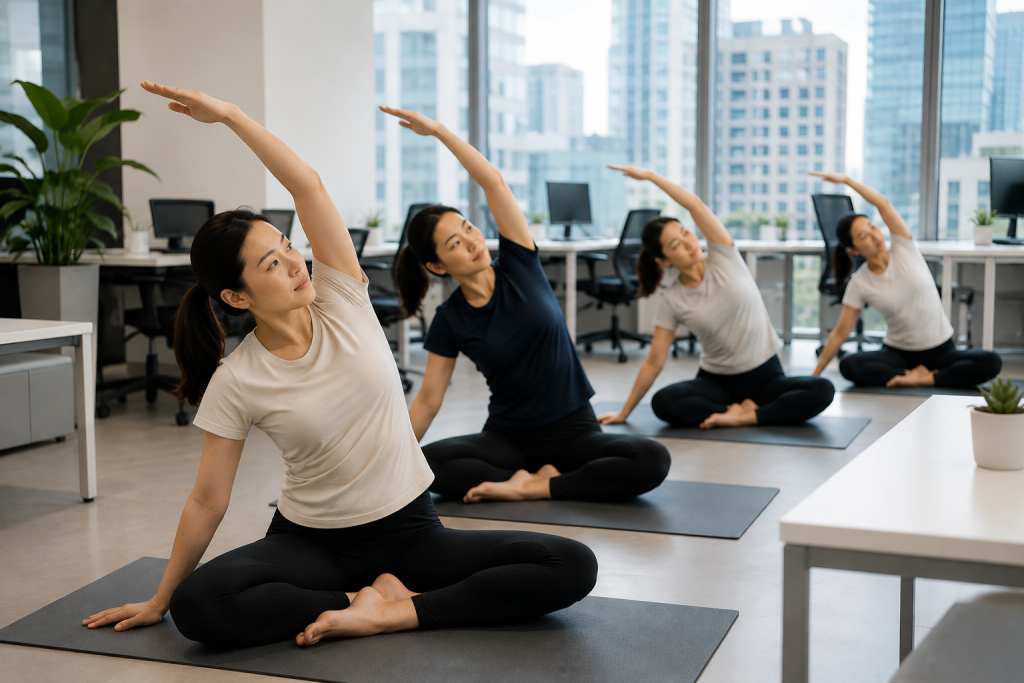
For many workplaces, a guided Mat Pilates session can be a practical way to introduce movement, posture awareness, breathing, and mindful exercise directly into the workday.
That is the idea behind PRB Goes To Office.
Instead of asking employees to leave the office and travel to a studio, Pilates Re Bar brings a professionally guided Corporate Mat Pilates experience directly to the workplace.
All you need is a suitable open space, some mats, and a team ready to move.
What Is Corporate Pilates?
Corporate Pilates is a workplace wellness activity that brings Pilates-based movement into the office or workplace environment.
A typical session can incorporate controlled movements, core engagement, mobility, posture awareness, breathing, and mindful movement.
Unlike a high-intensity workout, Pilates emphasizes control, precision, alignment, and body awareness.
This makes it a flexible option for companies looking to introduce employee wellbeing initiatives without turning the workplace into a gym.
At Pilates Re Bar, our PRB Goes To Office program is designed around this principle: make movement easier to access by bringing it closer to where people already spend much of their day.
Why Mat Pilates Works Well in the Workplace
The modern office can be physically repetitive.
Employees may spend hours sitting at a desk, working on laptops, attending meetings, or looking at screens.
Even when people understand the importance of movement, finding the time to exercise during a busy workday can be difficult.
This is where an office-based wellness session can help.
Instead of asking employees to travel to a fitness facility, a company can create a structured movement break within the workplace.
A 50-minute Corporate Mat Pilates session can become a moment to:
- Step away from the desk
- Move the body after prolonged sitting
- Develop greater awareness of posture and alignment
- Practice controlled breathing
- Reset mentally between work demands
- Connect with colleagues in a different environment
It doesn't have to replace an employee's regular exercise routine.
It simply creates another opportunity to move better during the workday.
Corporate Mat Pilates vs. Reformer Pilates: Which Is Better for the Office?
This isn't really a question of which method is "better."
Reformer Pilates and Mat Pilates serve different purposes.
Reformer Pilates uses specialized equipment that can provide resistance and support for a wide range of movements.
Mat Pilates, on the other hand, uses the body, gravity, and simple props to create a challenging movement experience without requiring large equipment.
For a Pilates studio, the Reformer is an excellent tool.
For an office environment, however, Mat Pilates can be significantly easier to implement.
There is no need to transport or install multiple Reformers. There is no dedicated studio required. And the session can be adapted to different workplace environments.
That makes Corporate Mat Pilates particularly suitable for:
Office wellness programs
Employee wellbeing initiatives
Team-building activities
Lunch-and-learn wellness sessions
Company anniversary events
Employee appreciation programs
Workplace health campaigns
The goal isn't to recreate a Pilates studio inside the office.
The goal is to make quality movement accessible to employees where they already are.
The Workplace Wellness Advantage: Less Logistics, More Participation
One of the biggest challenges in corporate wellness isn't necessarily finding a good activity.
It's getting people to participate.
A wellness program can be beautifully designed, but if employees have to travel 30 minutes to another location, change clothes, find parking, and return to the office, participation can become difficult.
Convenience matters.
By bringing Pilates into the workplace, companies can remove some of those barriers.
No dedicated studio required
A meeting room, multipurpose room, event space, or suitable open area may be enough, depending on the session and number of participants.
No large equipment setup
Corporate Mat Pilates doesn't require a room full of Reformers.
Easy to integrate into the workday
Sessions can be planned around lunch breaks, employee events, wellness days, or other company activities.
Suitable for group experiences
A guided session gives employees an opportunity to participate together rather than exercising individually.
This is where wellness and team connection can meet.
Why Pilates Can Be a Good Fit for Office Workers
Office workers don't necessarily need another activity that leaves them exhausted in the middle of the workday.
They may benefit more from movement that helps them reconnect with their bodies after hours of sitting and screen time.
Pilates emphasizes several areas that are relevant to everyday movement.
1. Posture Awareness
Pilates encourages participants to pay attention to alignment and how they position their body during movement.
For people who spend much of their day sitting, this awareness can be valuable.
The objective isn't to create a "perfect posture."
It's to help employees become more conscious of how they sit, stand, breathe, and move.
2. Core Engagement
Pilates incorporates controlled movements that engage the muscles around the trunk and pelvis.
Developing awareness and control of these muscles can support functional movement in everyday life.
3. Mobility
After spending hours in one position, moving through different ranges of motion can provide a welcome physical break.
Corporate Mat Pilates can incorporate mobility-focused movements that encourage employees to move beyond their usual desk posture.
4. Breathing and Mindful Movement
Pilates connects movement with breathing and concentration.
This creates a different experience from simply standing up and walking away from a desk.
For a short period, employees are encouraged to focus on what they are doing rather than what is happening on their screens.
That can make the session feel like both a movement break and a mental reset.
Corporate Wellness Doesn't Have to Feel Like Another Work Assignment
There is another important consideration for HR and People & Culture teams:
Wellness should be something employees want to participate in.
A corporate wellness program shouldn't feel like another mandatory meeting.
It can be an opportunity to create a different kind of workplace experience.
Imagine replacing one afternoon meeting with:
50 minutes of movement.
Colleagues step away from their laptops.
They move together.
They laugh when a movement feels challenging.
They slow down.
They breathe.
And they return to their workday with a shared experience that happened outside the usual meeting room routine.
That is where Corporate Pilates can become more than exercise.
It can become part of company culture.
A Practical Team-Building Activity for Modern Workplaces
Team building doesn't always have to happen around a table.
A shared movement experience creates a different kind of interaction because everyone participates in the same activity.
For companies, Corporate Mat Pilates can complement existing team-building and employee engagement initiatives.
It can work particularly well for:
- Corporate wellness days
- Employee appreciation events
- Team-building programs
- Women's wellness initiatives
- Company anniversaries
- Workplace health campaigns
- Office community activities
- Lunch-hour wellness programs
And because Pilates can be adapted by an experienced instructor, sessions can be structured for participants with different levels of exercise experience.
The emphasis is on participation, awareness, and movement—not competition.
PRB Goes To Office: Bringing Pilates to Your Workplace
At Pilates Re Bar, we believe wellness should be accessible beyond the studio.
That's why we created PRB Goes To Office.
PRB Goes To Office is our Corporate Mat Pilates offering, designed to bring guided Pilates sessions directly to workplaces.
Instead of asking your employees to visit a studio, we bring the experience to your office.
Depending on your workplace requirements, a session can be designed around your:
- Team size
- Available space
- Event objective
- Schedule
- Employee experience level
The format can be adapted for a small team, a larger employee group, or a special corporate event.
The result is simple:
Your workplace becomes the space to move.
What Can Employees Gain From a Corporate Pilates Session?
A Corporate Pilates session can support several dimensions of workplace wellbeing:
Movement Break
A structured opportunity to step away from prolonged desk work and move.
Posture Awareness
Employees learn to become more conscious of alignment and body positioning.
Mindful Breathing
Controlled breathing and concentration create a moment away from screen-based work.
Team Connection
Employees share an experience outside their normal work responsibilities.
Accessible Movement
Mat Pilates can be adapted for different experience and fitness levels.
A Positive Workplace Experience
Wellness activities can contribute to a workplace culture where employee wellbeing is actively valued.
Why Bring Pilates to the Office?
For HR teams, the question isn't simply:
"What wellness activity should we organize?"
A better question may be:
"What wellness activity will employees actually be able to participate in?"
Corporate wellness works best when it fits naturally into the working environment.
It should be accessible.
It should be practical.
And ideally, it should give employees something they can take away from the experience beyond the session itself.
Corporate Mat Pilates offers one way to achieve that.
No dedicated Pilates studio.
No row of Reformers.
No complicated infrastructure.
Just space to move, a qualified instructor, and a team willing to take 50 minutes away from their desks.
Ready to Bring Pilates to Your Office?
Your next team-building activity doesn't have to happen around a conference table.
Give your team a chance to move, reset, and reconnect.
With PRB Goes To Office, Pilates Re Bar brings Corporate Mat Pilates directly to your workplace.
Whether you're an HR professional, People & Culture leader, Office Manager, Executive Assistant, or business leader looking for a fresh workplace wellness activity, we can help you create a movement experience for your team.
Looking for a different corporate wellness activity?
Let's bring Pilates to your office.
Explore PRB Goes To Office and talk to Pilates Re Bar about a Corporate Mat Pilates session for your team.
Frequently Asked Questions About Corporate Pilates
What is Corporate Pilates?
Corporate Pilates is a workplace wellness program that brings guided Pilates sessions into an office or corporate environment. Sessions can focus on movement, posture awareness, breathing, mobility, and core engagement.
Can Pilates be done in an office?
Yes. Mat Pilates can be conducted in suitable office spaces such as meeting rooms, multipurpose areas, event spaces, or other open areas, depending on the group size and session format.
Do we need Pilates Reformers?
No. Corporate Mat Pilates does not require Reformers. This makes it easier to organize in an office environment without installing or transporting large fitness equipment.
Is Corporate Pilates suitable for beginners?
Mat Pilates can be adapted for different experience levels. A qualified instructor can provide appropriate modifications and guidance for participants who are new to Pilates.
How long is a Corporate Pilates session?
A typical PRB Goes To Office session can be structured around approximately 50 minutes, making it suitable for a workplace wellness break or corporate event.
What companies can benefit from Corporate Pilates?
Corporate Pilates can be considered by companies of different sizes that want to introduce movement and employee wellbeing activities into the workplace, including offices, corporate teams, startups, professional services firms, and other organizations.
Is Corporate Pilates available in Jakarta and Indonesia?
Pilates Re Bar can bring its PRB Goes To Office concept directly to workplaces, making Corporate Mat Pilates a convenient option for companies looking for workplace wellness activities in Indonesia. Contact Pilates Re Bar to discuss your location, team size, and requirements.
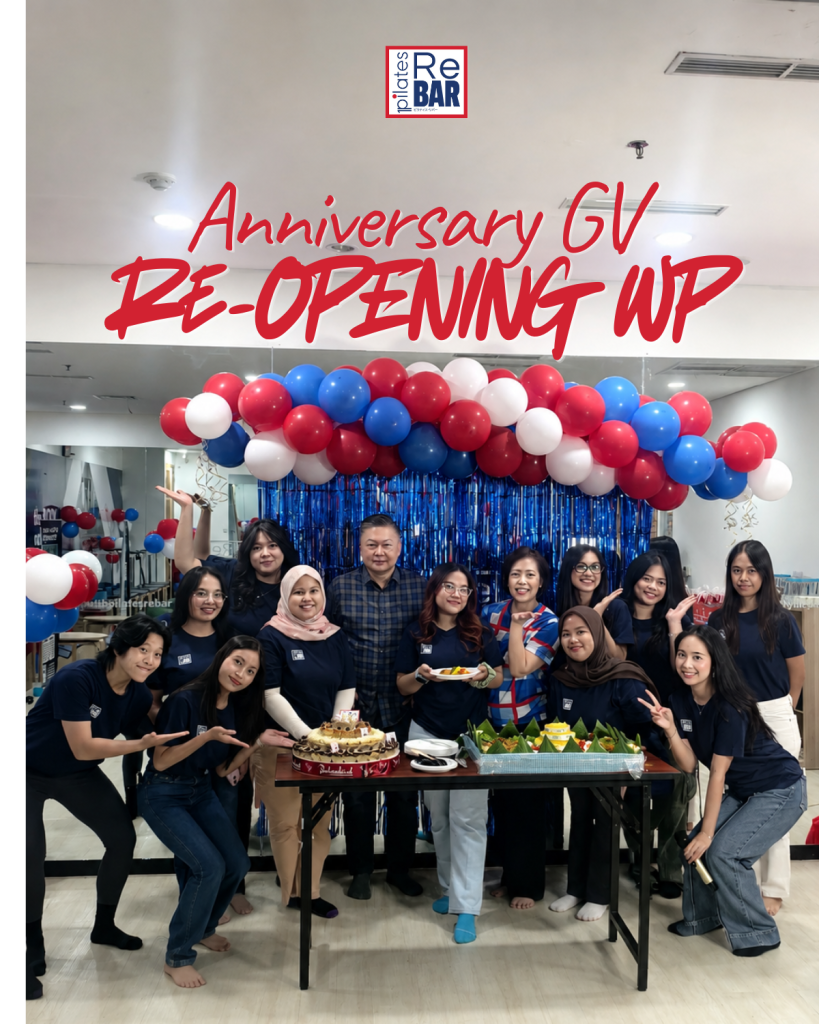
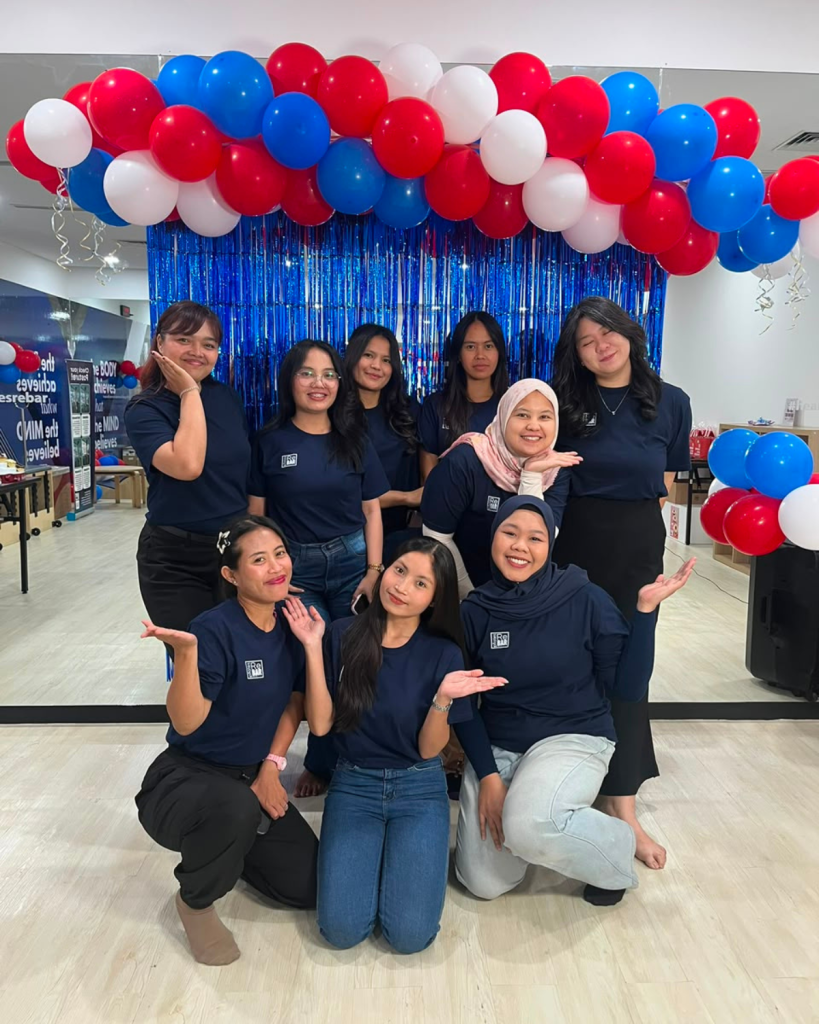
Anniversary Greenville and Re-opening Studio Wang Plaza
Two years ago, we started with a simple belief: movement can change the way we feel, work, and connect.
Two years later, that belief has grown into a community.
Our RE:START MOVE is not just about a new space. It's about creating more room for people to move, grow and connect.
From Greenville to Wang Plaza, the journey continues.
Because sometimes, a new chapter doesn't mean starting over.
It means moving forward with everything we've learned.
Here's to the next chapter of movement.
Challenge Yourself & Win Exclusive Rewards
This August, celebrate freedom by investing in the one thing that carries you through every stage of life—your body.
At Pilates Re Bar, we're turning the spirit of Indonesia's Independence Day into a movement challenge that inspires consistency, strength, and a healthier lifestyle. Whether you're a long-time Pilates enthusiast or just beginning your journey, the Move to Celebrate Challenge is designed to motivate you to move more, feel stronger, and be rewarded along the way.
Why "Move to Celebrate"?
Independence isn't just about a historical milestone—it's also about gaining freedom in our everyday lives.
Imagine having:
- The freedom to move without stiffness.
- The confidence to stand taller with better posture.
- More energy to keep up with work, family, and the activities you love.
- A stronger body that supports you for years to come.
Every Pilates session brings you one step closer to that freedom.
This August, let's celebrate not only Indonesia's independence but also your personal journey toward better health.
The Challenge
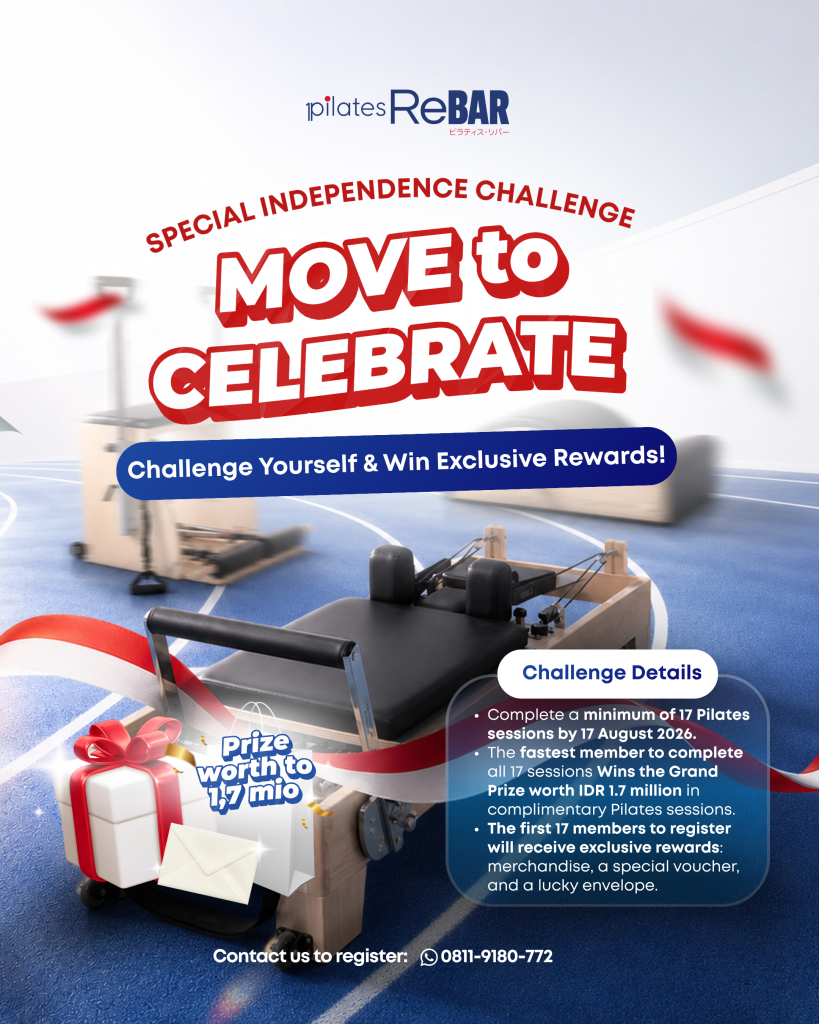
From 1–17 August 2026, join the Move to Celebrate Challenge and enjoy the excitement of reaching your fitness goals while unlocking exclusive rewards.
Here's how to participate:
Complete at least 17 Pilates sessions by 17 August 2026
Consistency is the key. Whether you attend Reformer, Tower, Chair, or other Pilates Re Bar classes, every session counts toward your goal.
Exciting Rewards Await
🏆 Grand Prize
The fastest member to complete all 17 sessions will receive the Grand Prize worth IDR 1.7 million.
It's our way of celebrating your incredible dedication and commitment.
🎁 Exclusive Finisher Rewards
The first 17 members who successfully complete the challenge will also receive:
- Pilates Re Bar merchandise
- Special voucher
- Lucky envelope with surprise rewards
Because every milestone deserves to be celebrated.
Why 17 Sessions?
The number 17 represents Indonesia's Independence Day on 17 August.
More importantly, it represents something else:
Building a healthy habit.
Research consistently shows that regular exercise improves:
- Core strength
- Flexibility
- Balance
- Posture
- Mental wellbeing
- Energy levels
- Overall quality of life
Seventeen sessions may sound challenging—but every class builds momentum toward lasting results.
Why Pilates?
Pilates is suitable for almost everyone, regardless of age or fitness level.
At Pilates Re Bar, our certified instructors guide every movement with proper technique and personalized attention, helping you:
- Strengthen your core safely
- Improve mobility and flexibility
- Reduce muscle tension
- Enhance posture
- Prevent injuries
- Build long-term functional strength
The goal isn't perfection.
It's progress.
Challenge Yourself. Celebrate Yourself.
This Independence Month, don't just watch the celebrations—be part of one.
Challenge yourself to stay consistent.
Celebrate every workout.
Celebrate every improvement.
Celebrate every step toward a stronger, healthier you.
Because the best reward isn't only the prizes.
It's becoming the healthiest version of yourself.
Ready to Join?
Registration is now open!
📅 Challenge Period: 1–17 August 2026
🎯 Goal: Complete 17 Pilates sessions
🎁 Rewards: Grand Prize worth IDR 17 million plus exclusive finisher gifts for the first 17 members.
📞 Register now: Contact our Studios if you are interested and Join the Challenge.
Available in all Pilates Re Bar Studios.
See you in the studio—and let's Move to Celebrate together!
When most people think about core strength, they immediately think about visible abs or doing hundreds of crunches. But a strong core is about much more than how your stomach looks.
Your core is the center of your body. It helps stabilize your spine, support your posture, control your movements, and create a strong foundation for everyday activities, exercise, and sports.
This is why Pilates for core strength has become increasingly popular among people who want to build a stronger and more stable body without relying only on traditional abdominal exercises.
So, does Pilates strengthen your core? Is Pilates good for core strength? And can Reformer Pilates build core strength?
The short answer is yes. Pilates is specifically designed to improve body control, stability, alignment, and muscular endurance — all of which are essential components of core strength.
What Is the Core?
The core is more than just your abdominal muscles.
It is a complex group of muscles located around the center of your body. These muscles work together to support and stabilize your spine, pelvis, and torso.
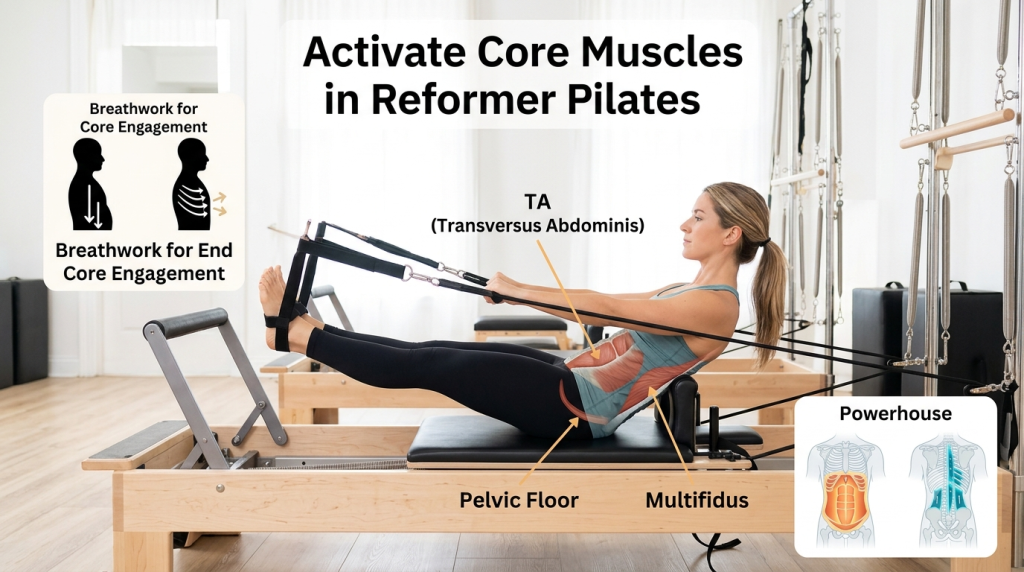
The core includes:
- The rectus abdominis, often associated with visible “six-pack” muscles
- The transverse abdominis, a deep abdominal muscle that helps stabilize the spine
- The internal and external obliques, which support rotation and side-to-side movement
- The multifidus, small muscles that support the spine
- The pelvic floor muscles
- The diaphragm
- Muscles around the hips, pelvis, and lower back
Together, these muscles create a system of support around your body.
This is why effective Pilates core strength training is not only about repeatedly flexing the spine. Instead, Pilates focuses on controlled movement and the ability to stabilize the body while the limbs move.
Why Core Strength Matters Beyond Visible Abs
A strong core can influence the way your entire body moves.
1. Better Posture
Your core helps support your spine and pelvis. When your core is strong and properly engaged, it may become easier to maintain a more stable and balanced posture.
This is especially relevant for people who spend long hours sitting at a desk, working on a laptop, or using a phone.
2. Improved Stability and Balance
Your core acts as a central point of stability.
Whether you are walking, lifting something, exercising, or standing on one leg, your body relies on your core to help control movement and maintain balance.
3. More Efficient Movement
A strong core allows the body to transfer force more effectively between the upper and lower body.
For example, movements such as walking, running, lifting, twisting, and reaching all require coordination between the core and other muscle groups.
4. Support for the Spine
The deep core muscles help provide support around the spine.
Through controlled movement and improved body awareness, Pilates can help people learn how to better control their posture and movement patterns.
5. Better Body Awareness
One of the key principles of Pilates is concentration.
Rather than simply moving through repetitions, Pilates encourages you to pay attention to your alignment, breathing, muscle engagement, and movement quality.
This awareness can help you better understand how your body moves.
How Pilates Activates Deep Core Muscles
One of the reasons Pilates is effective for core strength is that it focuses on controlled, precise movement.
In many Pilates exercises, the body must maintain stability while the arms and legs move.
This requires the deep stabilizing muscles to work continuously.
For example, during a Pilates exercise, you may be asked to:
- Keep your pelvis stable while moving your legs
- Maintain a neutral spine
- Control the movement of your rib cage
- Coordinate your breathing with movement
- Stabilize your trunk while moving your arms
- Maintain control throughout the entire range of motion
These small adjustments may appear simple, but they can create a significant challenge for the deep core muscles
Pilates vs. Traditional Ab Workouts
Traditional ab workouts often focus on exercises such as:
- Crunches
- Sit-ups
- Leg raises
- Russian twists
- Planks
These exercises can certainly be part of a fitness routine.
However, Pilates takes a different approach to core training.
Traditional abdominal workouts often focus on isolated movements. Pilates usually integrates the core with the rest of the body.
For example, a Pilates exercise may require you to stabilize your torso while moving your legs, control your breathing, maintain spinal alignment, and coordinate the movement at the same time.
This creates a more integrated approach to core training.
The goal is not simply to make the abdominal muscles tired.
The goal is to improve:
- Strength
- Stability
- Control
- Coordination
- Endurance
- Body awareness
This makes Pilates particularly suitable for people who want to build functional core strength.
How Reformer Pilates Challenges the Core
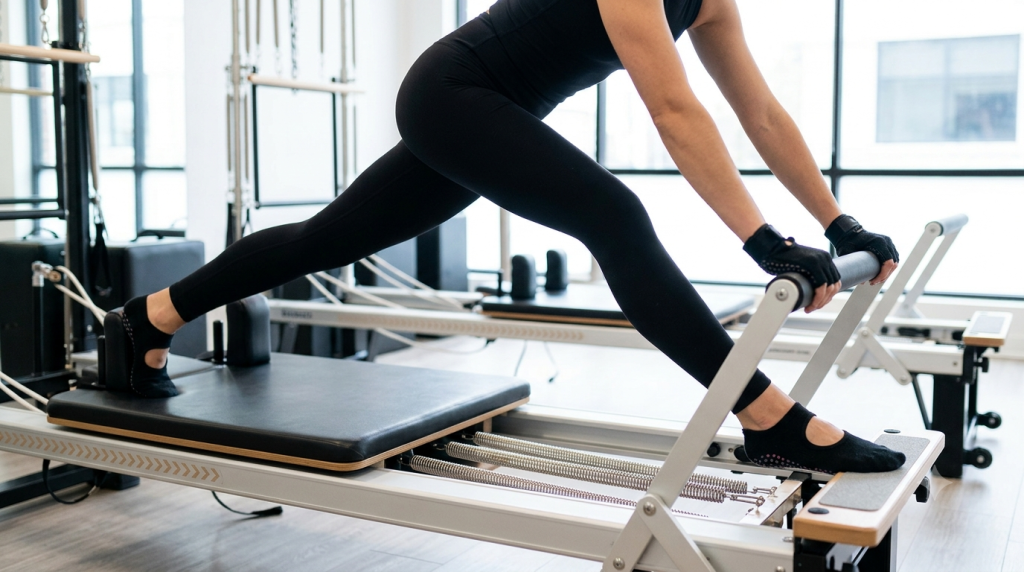
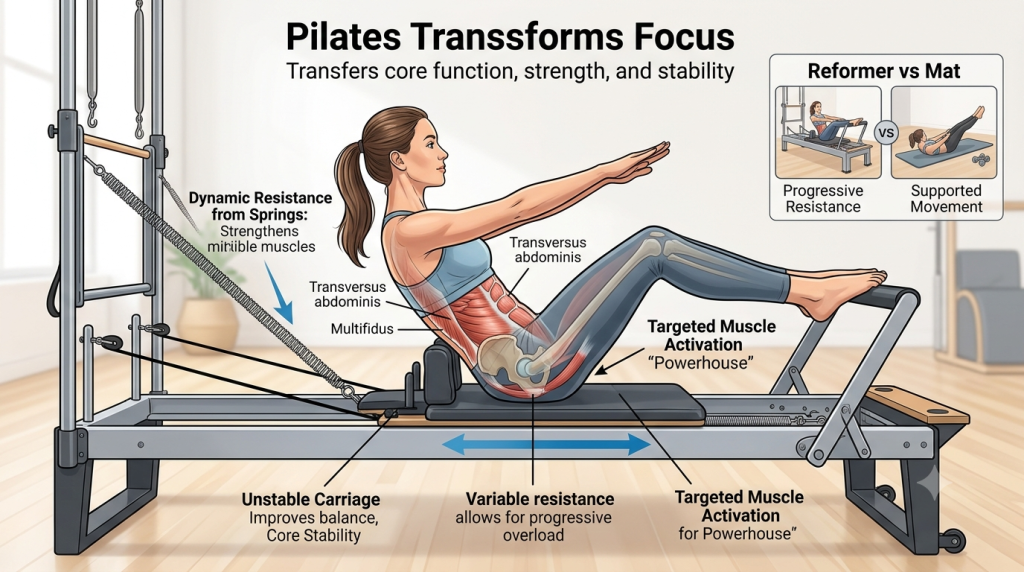
A Reformer Pilates class can provide an additional challenge for your core.
The Reformer uses springs, a moving carriage, straps, and other components to create resistance and instability.
This means your body may need to work harder to maintain control and alignment during different movements.
A Reformer Pilates core workout may challenge the body through exercises that require you to:
- Stabilize the spine while the carriage moves
- Control the legs against spring resistance
- Maintain pelvic stability
- Support the body during plank variations
- Coordinate upper and lower body movement
- Control the carriage through slow and precise movements
The moving carriage can make even a simple exercise more demanding.
Your body is not only performing the movement. It is also constantly working to control the position of the body.
This combination of resistance and control is one of the reasons many people use Reformer Pilates as part of their core-strengthening routine.
Does Pilates Strengthen Your Core?
Yes.
Pilates can strengthen the core by challenging the abdominal, back, pelvic, and stabilizing muscles through controlled movement.
The effectiveness of Pilates for core strength depends on several factors, including:
- The exercises performed
- The level of resistance
- The quality of movement
- Consistency
- Individual fitness level
- Proper technique
Pilates is not simply about performing as many repetitions as possible.
In many cases, the challenge comes from maintaining control and alignment throughout the movement.
Is Pilates Good for Core Strength?
Pilates can be an effective form of exercise for improving core strength, particularly for people who prefer controlled, low-impact movement.
It can also be adapted to different fitness levels.
A beginner may start with foundational exercises that focus on breathing, alignment, and body awareness.
As strength and control improve, the exercises can gradually become more challenging through:
- Increased resistance
- More complex movement patterns
- Longer holds
- Greater range of motion
- More challenging positions
This makes Pilates suitable for a wide range of people, from beginners to experienced fitness enthusiasts.
What Muscles Does Pilates Work?
Pilates can work many different muscle groups depending on the exercise and equipment used.
These may include:
- Abdominal muscles
- Deep core muscles
- Back muscles
- Glutes
- Hip muscles
- Legs
- Shoulders
- Arms
One of the defining characteristics of Pilates is that many exercises involve multiple muscle groups at the same time.
For example, a Reformer exercise may challenge the legs while requiring the core to stabilize the spine and the upper body to maintain proper alignment.
This creates a full-body movement experience.
Can Reformer Pilates Build Core Strength?
Yes, Reformer Pilates can help build core strength.
The Reformer provides adjustable resistance and a moving surface that requires control and stability.
As you perform different exercises, your core may need to work to maintain the position of your pelvis, spine, and torso.
Over time, consistent training can help improve muscular strength and endurance.
However, the results will depend on your individual program, training frequency, technique, and overall lifestyle.
The goal is not simply to make the workout feel difficult.
The goal is to progressively challenge the body while maintaining proper movement quality.
How Often Should You Do Pilates for Core Strength?
The ideal frequency depends on your goals, experience, and overall exercise routine.
For many people, practicing Pilates two to three times per week can provide a consistent foundation for developing strength and movement control.
Consistency is generally more important than occasional intense workouts.
A regular Pilates routine may allow you to gradually develop:
- Greater core endurance
- Better movement control
- Improved body awareness
- Increased stability
- More confidence during exercise
It is also important to allow your body to recover and to maintain a balanced exercise routine.
Pilates for Core Strength: The Bigger Picture
A strong core is not only about having visible abdominal muscles.
It is about creating a stable center that supports how your body moves.
This is why Pilates focuses on the connection between breathing, alignment, stability, control, and movement.
Whether you are a complete beginner, an experienced fitness enthusiast, or someone who spends most of the day sitting at a desk, Pilates can be an effective way to develop a stronger and more stable foundation.
And if you are looking for a more dynamic challenge, Reformer Pilates adds resistance and movement to traditional Pilates exercises, creating new ways to challenge your core.
Frequently Asked Questions
Does Pilates strengthen your core?
Yes. Pilates strengthens the core by engaging the abdominal, back, pelvic, and stabilizing muscles through controlled movements and exercises that require stability and body control.
Is Pilates good for core strength?
Yes. Pilates is particularly effective for developing core stability, muscular endurance, coordination, and body awareness.
What muscles does Pilates work?
Pilates can work the abdominal muscles, deep core muscles, back, glutes, hips, legs, shoulders, and arms depending on the exercises performed.
Can Reformer Pilates build core strength?
Yes. Reformer Pilates uses resistance and a moving carriage to challenge the body to maintain stability and control. This can help strengthen the core when practiced consistently with proper technique.
Is Pilates good for beginners?
Yes. Pilates exercises can be modified to suit different fitness levels. Beginners can start with foundational movements and gradually progress as their strength and body control improve.
How often should I do Pilates for core strength?
Many people practice Pilates two to three times per week as part of a consistent exercise routine. The ideal frequency depends on your personal goals, fitness level, and overall training schedule.
Does Pilates help build abs?
Pilates can strengthen the abdominal muscles and improve core control. However, visible abdominal definition depends on multiple factors, including genetics, body composition, nutrition, and overall physical activity.
Ready to Build Strength from Your Core?
A strong body starts with a strong foundation.
Whether you are new to Pilates or looking to deepen your current practice, a guided Reformer Pilates session can help you develop better control, stability, and strength through purposeful movement.
Ready to build strength from your core? Explore a Reformer Pilates session at Pilates Re Bar.
Have you ever wished for a workout that tones your body, improves posture, and enhances flexibility—all without adding bulky muscles? Meet Pilates—the graceful strength-builder that's changing bodies and lives, one mindful movement at a time.
Whether you're a beginner, a busy professional, or someone who simply wants to feel better in their own skin, Pilates offers a sustainable path to a leaner, taller, and stronger version of yourself.
Why Pilates? A Low-Impact Workout With Big Results
Unlike traditional weight training, which often focuses on bulking up specific muscle groups, Pilates emphasizes core strength, balance, and controlled movement. With roots in rehabilitation and body alignment, Pilates builds what many call “functional strength”—the kind of strength that supports everyday movements and long-term health.
Key Benefits of Pilates:
- Improves posture and spinal alignment
- Strengthens deep core muscles that support your back and joints
- Increases flexibility through controlled stretching and movement
- Creates long, lean muscle tone without the bulk
- Enhances mind-body connection, reducing stress and improving focus
How Pilates Makes You Look (and Feel) Taller
Many clients report feeling and looking taller after just a few sessions. Here’s why:
- Better Posture: Pilates trains your muscles to hold your spine in a healthy alignment, reducing the slouch and creating that lifted, elegant look.
- Lengthened Muscles: Movements are designed to elongate as they strengthen, giving you that “dancer body” feel.
- Body Awareness: You learn how to carry yourself with intention, which naturally adds to a taller, more confident presence.
Strength Without the Bulk
Pilates doesn’t rely on heavy weights or high reps. Instead, it focuses on precision and control. You'll challenge your muscles in ways that build strength from the inside out, particularly in your core, glutes, and stabilizing muscles.
This means you’ll gain functional strength that:
- Supports your spine and joints
- Improves coordination and balance
- Helps prevent injuries
- Makes daily activities easier and more efficient
Who Is Pilates For?

The beauty of Pilates is that it’s for everyone—regardless of age, body type, or fitness level. Whether you're recovering from injury, cross-training as an athlete, or simply trying to move more mindfully, Pilates meets you where you are.
It’s especially popular among:
- Women seeking toned, graceful physiques
- Men looking for flexibility and core stability
- Seniors wanting to maintain mobility and balance
- Dancers and athletes looking to prevent injuries
Reap the Long-Term Rewards
With regular practice (just 2–3 sessions per week), Pilates becomes more than a workout—it becomes a lifestyle. You’ll notice:
- Increased energy levels
- Reduced stress and tension
- Greater mobility and ease of movement
- A more confident posture and presence
Ready to Build a Taller, Stronger You?
If you're looking for a sustainable fitness routine that sculpts without stress, builds strength without bulk, and helps you feel more at home in your body, Pilates could be your perfect match.
Join a class at Pilates Re Bar Studios, work with our certified instructor, or try a beginner-friendly session online. Your taller, stronger, more empowered self is just a breath and a stretch away.
Many people believe you have to choose between being strong and being flexible. Pilates challenges that idea completely, showing that you can build both—without adding bulk.
Inspired by one of our member's testimony: https://www.instagram.com/reel/CvZcMTrO0-S/?utm_source=ig_web_copy_link&igshid=MzRlODBiNWFlZA==, here are the things that can inspire you.
Pregnancy is a remarkable and transformative period in a woman's life. It's a time of profound change, both physically and emotionally. While pregnancy brings about a multitude of joys and challenges, it also presents an opportunity for personal growth and self-care. Prenatal Pilates is a valuable companion on this journey, offering expectant mothers a path to a better, healthier, and more empowered version of themselves during this special time.
Mindful Preparation: Prenatal Pilates is not just an exercise routine; it's a holistic approach to pregnancy wellness. It encourages mindfulness and self-awareness, helping women connect with their changing bodies and the life growing within. This heightened awareness fosters a deep sense of appreciation for the miracle of pregnancy.
Physical Strength and Resilience: Pregnancy places unique demands on a woman's body. Prenatal Pilates helps build and maintain muscular strength, particularly in the core and pelvic floor, which can alleviate common discomforts such as lower back pain and support better posture as your body changes.
Flexibility and Mobility: As your body adapts to accommodate your growing baby, maintaining flexibility and mobility is crucial. Prenatal Pilates incorporates gentle stretching exercises that help you stay limber, reducing the risk of muscle tension and discomfort.
Enhanced Balance and Coordination: As your center of gravity shifts during pregnancy, you may experience balance and coordination challenges. Prenatal Pilates exercises focus on improving balance, helping you move with confidence and grace.
Pain Relief and Stress Reduction: Pregnancy can sometimes bring about physical discomfort and emotional stress. Prenatal Pilates promotes relaxation and controlled breathing techniques that can relieve tension, calm the mind, and enhance your overall sense of well-being.
Preparation for Labor: Prenatal Pilates provides tools to cope with the physical demands of labor. The controlled breathing and pelvic floor exercises can aid in strengthening the muscles needed for childbirth and assist in postpartum recovery.
Community and Support: Joining a Prenatal Pilates class can create a sense of community and support. You'll meet other expectant mothers, share experiences, and build connections that can be invaluable during pregnancy and beyond.
Empowerment: Embracing Prenatal Pilates empowers you to take an active role in your pregnancy journey. It helps you feel more in control of your body and the changes it undergoes, fostering a positive outlook and self-assurance.
Postpartum Benefits: The benefits of Prenatal Pilates extend beyond pregnancy. Strengthening the core and pelvic floor during pregnancy can facilitate a quicker postpartum recovery and enhance your overall physical well-being.
Remember, before embarking on any fitness routine during pregnancy, consult with your healthcare provider. Prenatal Pilates should be performed under the guidance of a qualified instructor who specializes in prenatal fitness. When approached mindfully and with professional guidance, Prenatal Pilates can be a transformative journey towards a better, healthier you during this beautiful phase of life.
Check the link below the explanation of our Coach Laura about this.
https://www.instagram.com/p/Cvet-OChYY3/?hl=en

Pilates, a versatile and low-impact form of exercise, can play a significant role in helping you reduce weight when incorporated into your fitness routine. Here are several ways Pilates can contribute to weight loss:
- Burn Calories: While Pilates may not burn as many calories as high-intensity workouts like running or aerobics, it still helps you burn calories. A 50-minute Pilates session can burn between 175 to 375 calories, depending on your intensity and body weight.
- Muscle Toning: Pilates emphasizes core strength and targets multiple muscle groups simultaneously. As you build lean muscle mass, your metabolism gets a boost. Muscle burns more calories at rest than fat, which can contribute to long-term weight loss.
- Improved Posture: Pilates promotes proper body alignment and strengthens the muscles responsible for maintaining good posture. As your posture improves, you may find yourself engaging your core and other muscles more effectively in everyday activities, burning more calories.
- Increased Flexibility: Improved flexibility from Pilates can lead to more efficient and calorie-burning workouts. Enhanced range of motion allows you to engage in other physical activities more effectively, further aiding in weight loss.
- Core Activation: Pilates places a strong emphasis on core muscles, including the deep muscles of the abdomen and back. A strong core can enhance stability and balance, allowing you to engage in higher-intensity workouts that burn more calories.
- Mind-Body Connection: Pilates encourages mindfulness, which can lead to better awareness of your body's needs. This awareness can translate into healthier eating choices and portion control, contributing to weight management.
- Stress Reduction: Pilates incorporates breathing techniques and relaxation, which can reduce stress levels. Lower stress can help regulate hormones related to weight gain and reduce emotional eating.
- Enhanced Energy Levels: Regular Pilates practice can boost your energy levels, making you more motivated to stay active throughout the day. Increased physical activity contributes to a higher calorie expenditure.
- Digestive Health: Certain Pilates movements can aid in digestion by massaging and stimulating the digestive organs. Improved digestion ensures your body effectively processes nutrients and eliminates waste.
- Sustainable Exercise: Pilates is a low-impact exercise that is gentle on the joints, making it suitable for people of various fitness levels and ages. Its adaptability means you can incorporate it into your long-term fitness routine, helping you maintain weight loss results.
To maximize the weight loss benefits of Pilates, it's essential to complement your practice with a balanced diet and other forms of exercise, such as cardiovascular workouts and strength training. Consulting with a certified Pilates instructor or fitness professional can help you create a tailored Pilates plan that aligns with your weight loss goals and fitness level.